How to Display Autographed Photos and Protect Your Collection
Why How You Display Your Autographed Photos Matters as Much as the Signature Itself
Proper storage for your autograph collection can be just, if not more important than the autograph itself. When the proper care is taken to preserve your autograph, the value of your piece can increase. Keep in mind that storing and displaying your autograph are two different things. Storing focuses on protecting the item from environmental damage (light, humidity, handling), while displaying prioritizes showcasing the item and therefore requires more advanced protection to prevent rapid fading or deterioration.
When displaying your autograph, the primary threat to UV light. UV and IR radiation can fuel chemical reactions that may lead to deterioration. Every type of decision from material grade to wall placement can determine how much damage can be done to your autograph.
Framing Autographed Photos: The Materials That Determine How Long a Signature Lasts
Determining the best materials that are the safest for displaying and storing your autograph is not a difficult task. All things such as ink type, paper materials, and framing can impact how long your autograph can and will be preserved.
Acid-free, lignin-free mat board is essential to prevent yellowing and ink damage, while archival mounting methods like the T-hinge (or H-mount for heavier pieces) ensure the photo is secured without adhesive contact on the signed surface. Standard sizes such as 8×10, 11×14, and 16×20 fit off-the-shelf frames, but the most important investment is UV-protective glass, which plays a larger role than the frame itself in preserving the autograph long term.
UV Glass vs. Regular Glass: The Most Important Choice You'll Make for Your Display
Glass type directly determines how long an autograph remains legible. Standard glass provides essentially no UV protection, allowing ultraviolet light to degrade ink over time. In contrast, UV-filtering glass must block at least 97% of UV rays to meet conservation standards, while museum-grade options block up to 99%, dramatically slowing fading and deterioration, making standard glass a poor choice for any long-term display.
Museum-grade glass and acrylic both offer high UV protection but differ in use: glass is more scratch-resistant and optically clear, while acrylic is lighter and shatter-resistant, making it better for large frames or display cases. However, lower-grade acrylic scratches easily and offers weaker UV protection, so material quality is just as important as the format.
For best results, collectors should look for glazing rated at 99% UV protection (the conservation benchmark), with optional anti-reflective coatings for improved visibility. For display-ready protection in smaller formats, options like the provide a practical balance of clarity and protection when paired with controlled lighting.
Where You Hang Your Autographed Photos — And Where You Should Never Hang Them
General rule of thumb is to hang your autographs in a cool, dry, dark, and climate-controlled areas (65-75°F, 35-55% humidity), and of course using acid-free matting, in a display case that is specialized case that is away from windows.
Remember, room temperature does affect the longevity of your autographs. High temperatures accelerate fading, while extreme fluctuations and high humidity can cause moisture damage, mold growth, and even ink bleeding, especially on items like baseballs.
Display tip: Rotate your displayed autographed photos every 3-6 months, even if there is no direct sunlight involved. This helps to prevent over exposure.
Display Cases, Shadow Boxes, and Toploaders: When a Standard Frame Isn't the Right Answer
A shadow box is the best choice when you want to display signed photo alongside related memorabilia like tickets, programs, badges, or small props. Unlike standard frames, shadow boxes have depth, allowing you to layer items and include dimensional objects without compressing or damaging them. This makes them ideal for storytelling displays that go beyond a single flat piece.
UV-filtering acrylic display cases is great for three-dimensional collectibles such as signed helmets, jerseys, figurines, or props, are the preferred option. These cases provide a protective enclosure that reduces dust and environmental exposure while also limiting UV damage. Acrylic is especially useful here because it’s lightweight and shatter-resistant, and higher-grade versions include UV coatings specifically designed for long-term preservation.
Toploaders (rigid, PVC-free plastic sleeves) serve as a practical, entry-level solution for flat signed photos. They’re useful for transport, short-term storage, or casual display, but they offer no UV protection and minimal defense against environmental damage. For that reason, they should be viewed as a temporary holding option rather than a permanent display method.
Overcrowding can diminish the impact of individual signatures, and items placed too closely together may rub or shift into each other, increasing the chance of abrasion or accidental harm.
Displaying Signed Funko Pops: Protecting the Signature on the Box and the Figure
Signed Funko Pop boxes are a unique collectible due to their signatures being applied to the box’s exterior. Deciding how you will display your Funko plays a key role in its’ preservation.
UV-protective acrylic Pop protectors that are sized for standard Funko boxes can protect both the box art and the signature without requiring removal from packaging.
For some collectors, they may want to display the figure itself, removed from the box using a sealed acrylic case that protects the signature on the figure surface. Due to its curved plastic surface, a Funko figure can be more susceptible to ink adhesion issues than flat photo paper.
SWAU offers Funko Pop signings in two formats: flat box, where the signature is placed on the front panel, and full box, where the autograph wraps around the packaging. Both formats are designed to fit standard Pop protector cases for easy display. SWAU’s authentication hologram is applied at the time of signing, ensuring it remains intact and visible regardless of the display case used.
How Authentication Documentation Protects Your Display — And Your Investment
Authentication should always remain visible when displaying a signed item. Whether it’s a PSA/JSA label, Beckett sticker, or SWAU’s tamper-proof hologram, this marker is a critical part of the item’s provenance and should never be covered, removed, or obscured. Its visibility is what allows future buyers, appraisers, or insurers to verify the autograph’s legitimacy.
When framing SWAU-authenticated pieces, plan around the hologram. Before cutting mat openings, check its placement and adjust the layout if needed so the hologram remains visible within the display. Covering it with mat board, even unintentionally, reduces the item’s verifiability and can negatively impact both trust and value.
SWAU’s system provides dual layer authentication: a physical hologram on the item and a digital verification record accessible at. This combination strengthens resale value, supports insurance and appraisal requirements, and offers a level of documented provenance that unsigned or loosely authenticated pieces typically lack.
Building a Display-Ready Collection: How SWAU's Signings Arrive Frame-Ready
A display-ready autograph is one with verified provenance from the moment it’s signed. Every item from a SWAU signing arrives with a tamper-proof hologram already applied, meaning no additional authentication is needed before framing. This documented chain of custody ensures the piece is ready for immediate display with confidence in its legitimacy.
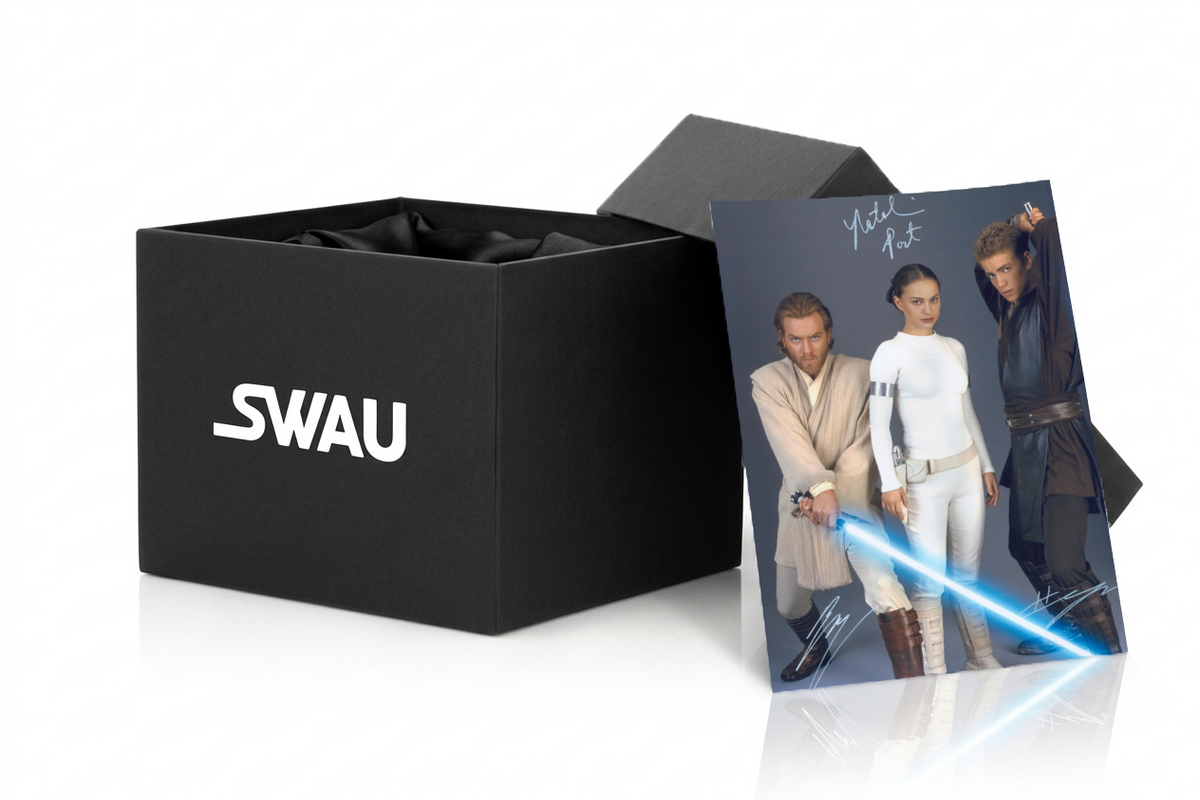
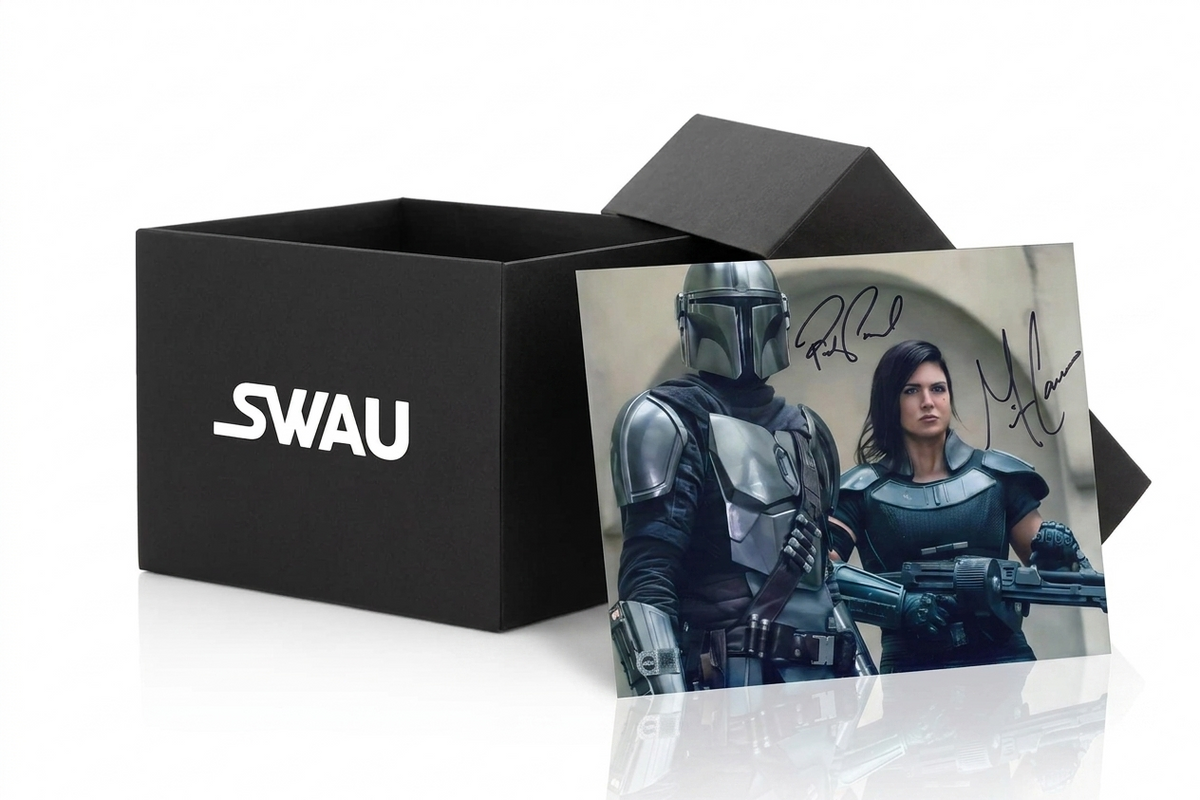
SWAU offers signed photos in standard sizes like 8×10, 11×14, and 16×20, which align with common archival frame dimensions. This makes it easy for collectors learning how to display autographed posters or photos to move pieces directly from packaging into proper frames without custom sizing or additional preparation. Compared to convention or fan-mail autographs, this consistency simplifies the entire display process.
Collectors can build or expand their display with signatures from major franchises like Star Wars, Marvel, and DC through SWAU’s private signings, with inventory available while supplies last. For those with existing items, the send-in option allows personal pieces to be signed under supervision and returned with the same tamper-proof hologram, making them equally display-ready. Flexible payment options such as Affirm and Shop Pay also make it easier to grow a framed collection over time.